


Table of Contents
Introduction to BTC20
As concerns about online scams Canada continue to rise, BTC20 has emerged as a token requiring scrutiny. BTC20 positions itself as an Ethereum-based Proof-of-Stake token mirroring Bitcoin’s supply and issuance schedule. Despite claims of Belgian registration and a successful presale, skepticism persists: is BTC20 a legitimate investment, or a scam? This BTC20 review outlines the warning signs every investor should consider before committing funds.
This guide is for those who have lost money in BTC20 or are hesitating to invest due to regulatory warnings. Our goal is to help readers avoid investment scams Canada and make informed decisions while navigating potential online fraud Canada.
BTC20: Regulation & Legal Status
BTC20’s materials claim Belgian registration, but it is not regulated by top-tier authorities such as the FCA, ASIC, or CySEC. In fact, Belgium’s Financial Services and Markets Authority (FSMA) issued a public warning noting that BTC20.com failed to notify regulators for mass-media cryptocurrency promotion and did not respond to inquiries.
Unregulated platforms carry significant risk, offering no investor protection or recourse in case of financial fraud Canada. To understand how to identify such schemes, review How to Get My Money Back from a Scam and learn to spot red flags before investing. Lack of oversight raises serious questions about whether BTC20 constitutes a trading platform scam Canada.
Trading Conditions & Platform Analysis of BTC20
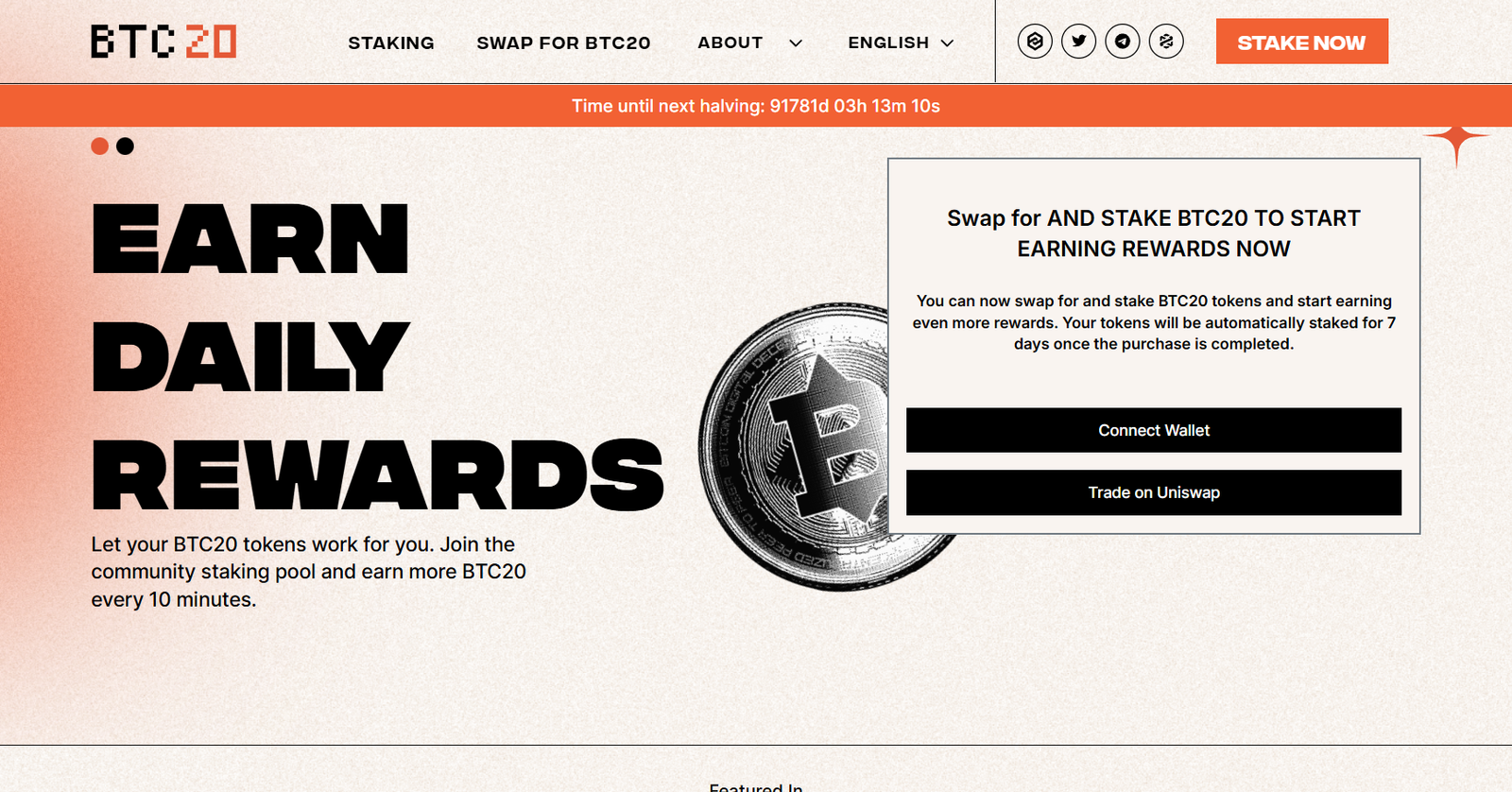
BTC20 operates as a stake-to-earn token rather than a traditional trading platform. According to its whitepaper, it mirrors Bitcoin’s issuance and halving schedule through an ERC-20 framework. Token holders stake to earn rewards via smart contracts.

However, BTC20 lacks transparency on liquidity, token distribution, and audit coverage. It does not provide details on verified liquidity sources or execution protocols. Without these disclosures, investor trust is hard to justify. To mitigate risk, review what to check before signing up with a trading platform. These missing elements make it difficult to dismiss concerns that BTC20 might be a fraud.
Reputation & User Reviews About BTC20
BTC20 generated online buzz during its presale, yet credible reviews remain scarce. Some Reddit users highlighted typical staking pitfalls such as locked withdrawals and anonymous development teams. Regulatory warnings, broken contact information, and poor community feedback reinforce these concerns.
Platforms like TrustPilot may feature unverifiable or overly positive testimonials. To cross-check, use BTC20 contract validation tools to verify authenticity. Considering these factors, BTC20 may fall under investment scams Canada.
How to Test Whether BTC20 Is a Scam
Protect yourself by following these steps:
- Check Regulation Status: Confirm through FSMA or other relevant authorities; note the existing FSMA warning.
- Inspect Token Metrics: Seek independent audits, clear token allocation, and transparent staking terms.
- Read Genuine Reviews: Focus on detailed user experiences instead of promotional blurbs.
- Test Minimal Staking: Stake small amounts first to observe contract behavior and reward distribution.
- Avoid Guarantee Traps: Treat promises of guaranteed high returns with skepticism.
- Report Suspicious Activity: Use the FTC fraud reporting portal if needed.
These steps help reduce exposure to online fraud Canada and other trading scams Canada targeting inexperienced investors.
Final Verdict & Alternatives
BTC20 presents multiple red flags: regulatory warnings, lack of transparency, opaque staking mechanics, and hype without substantiated utility. Extreme caution is advised, and investing in this token may pose unnecessary risks.
For safer alternatives, consider established cryptocurrencies and regulated platforms like Ethereum staking services, or tokens with audited smart contracts on Coinbase, Binance, or Kraken. Prioritize platforms offering licensing, transparency, and positive broker scam reviews Canada to minimize financial fraud Canada risk.